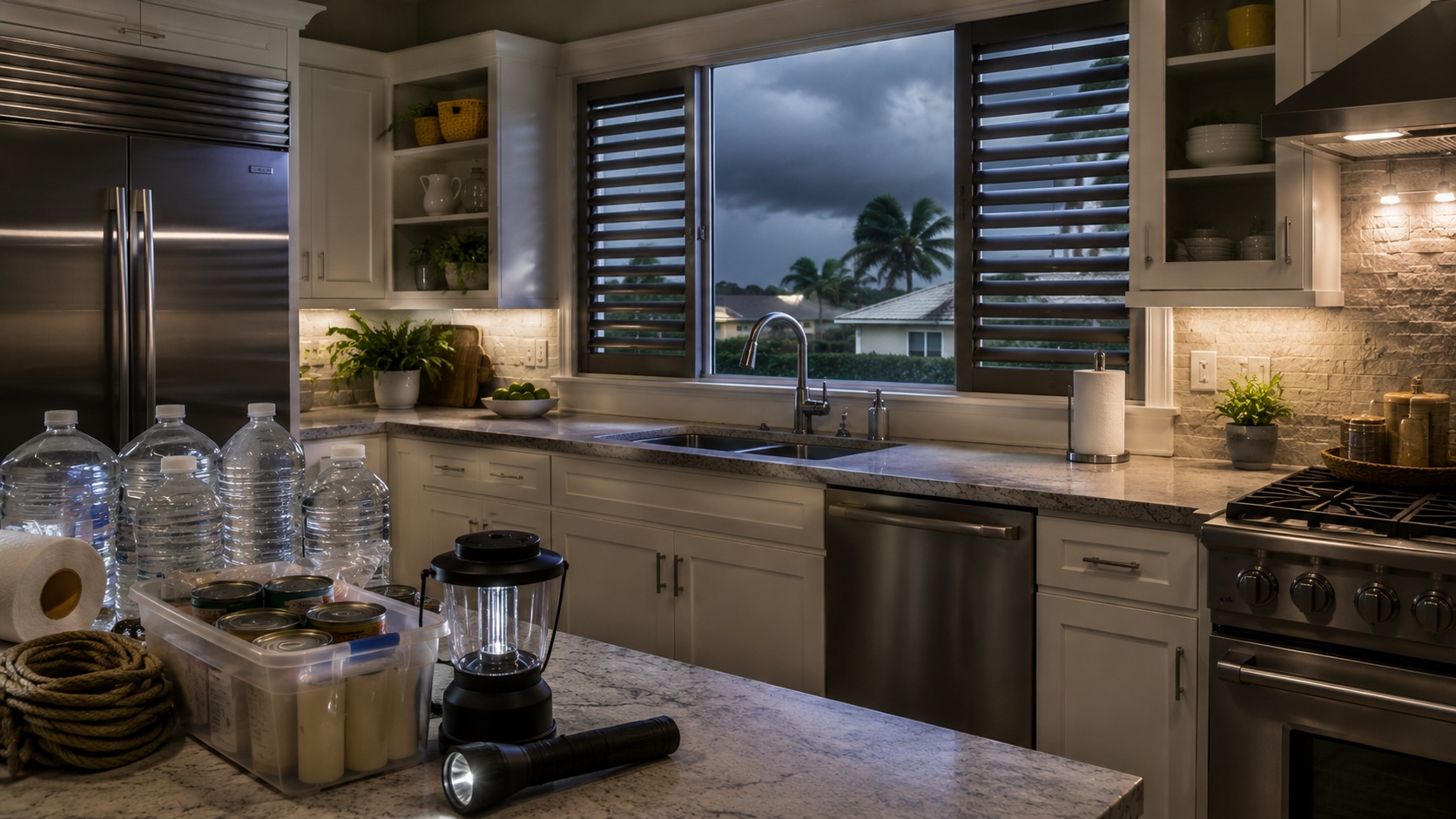
Every June, Southwest Florida braces for the same six-month gauntlet: hurricane season runs from June 1 through November 30, and the appliances inside your home are some of the most expensive items at risk.
We've serviced thousands of post-storm appliance calls in Naples, Marco Island, Bonita Springs, Fort Myers, and Cape Coral. The damage we see is almost always preventable. Power surges fry control boards. Floodwater destroys motors. Spoiled food forces fridge replacements. And almost every one of these losses traces back to one thing: no prep.
This is the checklist we give our own customers. Print it, save it, and run through it the moment the National Hurricane Center starts watching a system in the Gulf.
72 Hours Before Landfall
1. Photograph Every Appliance
Open your phone, walk through your kitchen and laundry room, and take a clear photo of each major appliance — front, side, and the model/serial sticker. If you need to file an insurance claim later, this is what adjusters ask for first. No photos, no payout.
2. Empty and Defrost Your Secondary Freezer
That garage freezer full of meat? It's the first thing you'll lose if the power goes out for more than 48 hours. Move what you can to your main fridge-freezer (which holds cold longer when full) or cook/donate the rest. An empty freezer is easier to clean if water gets in.
3. Turn Your Refrigerator to the Coldest Setting
48 hours before the storm, drop your fridge to its coldest setting and your freezer to maximum. The colder the contents start, the longer they'll last during an outage. A full freezer holds safe temperatures for 48 hours; a half-full one only 24.
4. Fill Empty Freezer Space With Water Bottles
Frozen water bottles do two jobs: they keep your freezer colder during an outage, and they become drinking water once they thaw. This is the single cheapest hurricane prep trick we know.
24 Hours Before Landfall
5. Run a Load of Laundry and Dishes Now
You may not have power — or clean water — for days. Wash everything you can while the utilities are still working. Empty the lint trap. Wipe down your washer drum.
6. Unplug Everything You Can
This is the step most people skip. Power surges don't happen during the storm — they happen when power comes back on. A surge from a downed transformer or restored grid can destroy:
- Refrigerator control boards ($400–$900 to replace)
- Washer and dryer electronic panels ($300–$700)
- Dishwasher main boards ($250–$500)
- Microwave electronics ($150–$400)
- Range and oven control modules ($400–$800)
Unplug your washer, dryer, dishwasher, microwave, and any countertop appliances. Leave only your refrigerator plugged in — and even then, consider a whole-home surge protector if you don't already have one.
7. Shut Off Water to the Washer
Turn the hot and cold supply valves behind your washing machine clockwise until they stop. Hurricane-force winds can shift your house just enough to crack a connection, and you do not want to come home to a flooded laundry room.
8. Clear the Dryer Vent
A clogged dryer vent is a fire hazard year-round, but during a storm with windows shut and Florida humidity sky-high, it's worse. Pull the vent off the back, vacuum it out, and check that the exterior flap isn't blocked by debris.
During the Storm
9. Keep the Fridge and Freezer Closed
We cannot stress this enough. Every time you open the door, you lose hours of cold. Decide what you need before you open it. Pull out your meals for the day in one trip. Treat that door like a bank vault.
10. Do Not Run a Generator Into Your Appliances Without a Transfer Switch
If you're running a portable generator, do not backfeed it into your home's electrical panel. This is dangerous, illegal, and will destroy your appliances when grid power returns. Plug appliances directly into the generator using heavy-duty extension cords, or have a licensed electrician install a transfer switch before the next storm.
After the Storm
11. Wait Before Plugging Anything Back In
When power returns, do not immediately plug everything back in. Voltage often fluctuates wildly for the first 30–60 minutes. Wait for the lights to stop flickering, then start with one appliance at a time.
12. Check for Water Damage Before Powering On
If your home took on any water — even a few inches — do not plug in a washer, dryer, dishwasher, or refrigerator until a technician has inspected it. Water in a motor or control board will short the moment you flip the switch, and you'll turn a $200 repair into a $1,500 replacement.
13. The 4-Hour / 48-Hour Food Safety Rule
- Refrigerator: Food is safe for 4 hours if the door stays closed
- Full freezer: Safe for 48 hours
- Half-full freezer: Safe for 24 hours
Anything above 40°F for more than 2 hours? Throw it out. We've seen too many families get sick because they didn't want to waste $200 worth of meat.
14. Listen for Unusual Sounds
Power surges and voltage drops cause silent damage. For the first week after a storm, listen carefully:
- Refrigerator clicking but not cooling? → Compressor relay or start capacitor
- Washer humming but not spinning? → Motor or control board
- Dryer running but not heating? → Heating element or thermal fuse
- Dishwasher cycling but no water? → Inlet valve
These are all surge-related failures we see constantly in the weeks after a storm.
What to Do If You Need Service Post-Storm
After major storms, every appliance repair company in Southwest Florida gets buried. We typically run a 5–10 day backlog after named storms. Call us as soon as you spot a problem — don't wait until your fridge has been dead for three days.
We service Naples, Marco Island, Bonita Springs, Estero, Fort Myers, Cape Coral, Ave Maria, Golden Gate, Pelican Bay, Fort Myers Beach, and Lely. We work with your insurance, document damage thoroughly, and prioritize storm-damage calls during recovery.
The Bottom Line
Hurricane prep isn't paranoia — it's math. A $30 surge protector beats a $900 fridge repair every single time. Twenty minutes of unplugging beats a week without laundry.
If you want a free pre-season inspection — we'll check your washer hoses, dryer vent, fridge seals, and surge protection — call us before June 1. We do these all spring and they take about 30 minutes per home. Heading north for the summer? Combine the inspection with our snowbird shutdown checklist — it's the companion guide to this one.
Stay safe. Stay dry. And keep that freezer closed.
Continue Reading
- Snowbird's Appliance Shutdown Checklist: How to Protect Your Naples Home Before You Head North — the seasonal-departure companion to this guide
- Why Florida Humidity Is Slowly Destroying Your Appliances — and How to Stop It — the year-round damage that happens between storms
- Why Your Energy Bill Is Higher Than Expected — Your Appliances Might Be the Reason — what aging or surge-damaged appliances quietly cost you