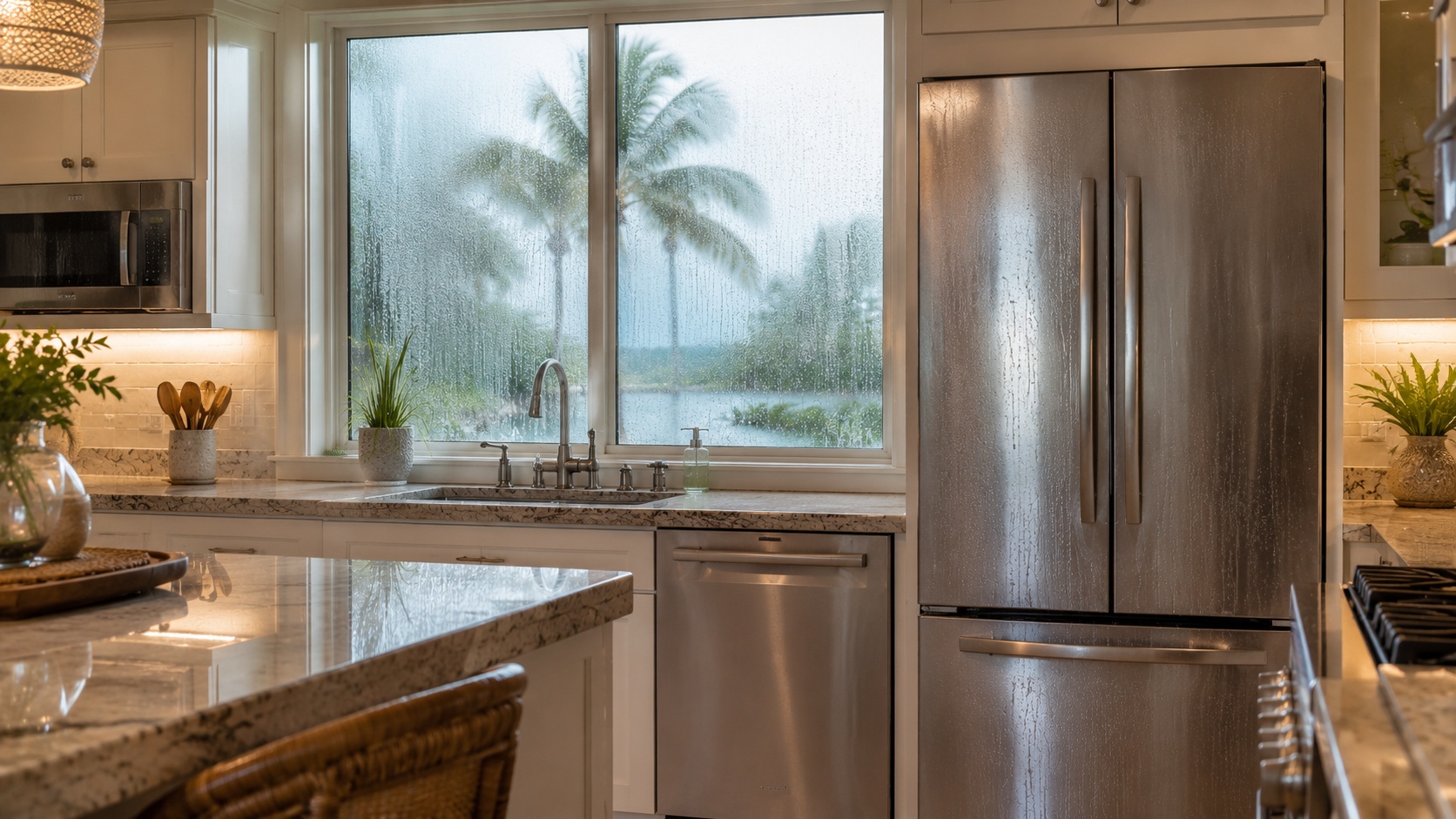
If you've lived in Southwest Florida for more than a season, you already know — humidity isn't just a weather report. It's a slow, relentless force that affects everything from your hardwood floors to your hair to your appliances. What most homeowners don't realize is just how aggressively Florida's 70-90% relative humidity attacks the major appliances in their home.
refrigerator in Naples last on average 8-10 years. The same models in Denver last 15+. Why? Humidity. Here's what's happening inside your appliances right now — and what you can do about it.
How Humidity Damages Appliances
When warm humid air contacts cooler surfaces inside your appliances, it condenses into water. Day after day, year after year, this moisture causes:
- Corrosion on metal components, control boards, and heating elements
- Mold and mildew growth inside washers, dishwashers, and refrigerator gaskets
- Insulation degradation in refrigerator and freezer walls
- Compressor strain — units work harder to remove humidity from cold air
- Electrical failures as moisture creeps into circuit boards
Florida's salt air (especially within 5 miles of the coast in Marco Island, Naples, and Fort Myers Beach) accelerates corrosion dramatically. Coastal homes often see appliance failures 30-40% sooner than inland homes.
Refrigerators: The #1 Humidity Victim
Your refrigerator runs 24/7, fighting both internal humidity (from food) and external humidity (from your kitchen). Common humidity-related failures:
Condenser coil corrosion
Located at the back or bottom of your fridge, these coils dissipate heat. Florida humidity + salt air corrodes them, reducing efficiency. Eventually the compressor overheats and fails.
Defrost drain clogs
The drain line from the freezer's evaporator coil collects condensation. Florida's mineral-heavy water and humidity create biofilm that clogs this line, causing water to leak inside the fridge or onto your floor.
Door gasket failure
The rubber seal around your fridge door stays moist year-round. Mold develops, the rubber stiffens, and the seal fails. You see condensation on outside of doors — a sign of trouble.
Protection:
- Clean condenser coils every 6 months (more often if you have pets)
- Run a wet/dry vacuum hose down the defrost drain annually
- Wipe door gaskets monthly with diluted vinegar
- Keep refrigerator at 37°F (not lower) to reduce condensation
Washing Machines: Front-Load Disasters
Front-load washers became popular for water efficiency, but they're a humidity nightmare in Florida. The rubber door boot stays damp between washes, growing aggressive black mold within 6-12 months.
Symptoms:
- Musty smell inside the drum
- Black streaks on the door gasket
- Clothes coming out smelling worse than they went in
Protection:
- ALWAYS leave the door cracked open after washing
- Run a "tub clean" cycle monthly with bleach or washer cleaner
- Wipe the door boot dry weekly
- Consider a top-loader if you're starting fresh in Florida
Dryers: Lint + Humidity = Fire Hazard
Florida humidity makes lint stick to vent walls more aggressively than in dry climates. Combined with our long air conditioning runs that pull humid air into the laundry room, dryer vents clog 2-3x faster than the national average.
Risk:
- Clogged vents are the #1 cause of residential dryer fires
- Florida averages 200+ dryer-related house fires per year
- Reduced airflow = longer drying cycles = higher electric bills
Protection:
- Clean lint filter EVERY load (yes, every single one)
- Have your dryer vent professionally cleaned every 12-18 months
- If your dryer is taking 2+ cycles to dry clothes, your vent is clogged
- Check the outside vent flap — if it doesn't open during drying, blockage is severe
- Add vent cleaning to your hurricane prep checklist — windows shut, AC running, humidity trapped indoors = peak fire conditions during storm season
Dishwashers: Hard Water + Humidity
Most of SW Florida has hard water (high mineral content from limestone aquifers). Combined with humidity, this creates two problems:
1. Mineral deposits on heating elements, spray arms, and pumps 2. Mold in the door gasket (worse in coastal areas)
Symptoms:
- Dishes coming out spotted or cloudy
- White residue on glasses
- Detergent dispenser sticking
- Bad smell when opening
Protection:
- Use rinse aid (specifically formulated for hard water)
- Run a dishwasher cleaner cycle monthly
- Wipe gasket dry after each cycle
- Consider a whole-house water softener if you live in Naples, Marco, or Bonita
Wine Coolers & Beverage Centers (Naples Special)
In premium Naples and Marco Island homes, wine coolers and beverage centers are constantly fighting humidity. The cooler the unit runs, the more condensation forms on the door seal and inside the cabinet.
Common issues:
- Compressor overworked and failing early
- Drainage blockages causing pooling water
- Door seal mildew
- Glass door fogging
Protection:
- Don't set wine coolers below 50°F
- Inspect drain line annually
- Clean condenser coils every 6 months
- Replace door gasket if mildew won't clean off
- If you're leaving for the summer, follow our snowbird shutdown checklist — six unattended months in Florida humidity destroys wine coolers fastest
Florida-Specific Maintenance Schedule
Print this and put it on your fridge:
Monthly:
- Wipe washer door boot dry
- Clean dishwasher gasket
- Run washer/dishwasher cleaner cycle
Every 6 months:
- Vacuum refrigerator condenser coils
- Vacuum dryer vent (full path, including outside flap)
- Check garbage disposal for buildup
Annually:
- Clean refrigerator defrost drain
- Professional dryer vent cleaning
- Replace water filter
- Inspect all door gaskets
When Maintenance Isn't Enough
Even with perfect maintenance, Florida appliances eventually lose the fight. Coastal salt air, year-round humidity, and hard water shorten the average lifespan of every major appliance in your home by 30-40% compared to a dry inland climate. That's reality.
When that day comes — your fridge stops cooling, your washer floods, your dryer takes three cycles, your wine cooler fogs and won't clear — the question is whether to repair or replace. In most cases, a well-maintained appliance is worth repairing once or twice before replacement. Premium brands like Sub-Zero, Wolf, Viking, and Miele almost always make sense to repair; mid-tier brands depend on age and the specific failure.
When to Call AllFix
We're a local Southwest Florida appliance repair team — Naples, Marco Island, Bonita Springs, Estero, Fort Myers, Cape Coral, Pelican Bay, Ave Maria, Golden Gate, Fort Myers Beach, and Lely. We've seen every variation of humidity damage there is, and we factory-train on the brands most common in luxury and coastal homes.
Same-day service available for most repairs. Upfront diagnostic, no surprise pricing, 90-day warranty on every job.
📞 Call (239) 544-4666 or book online — and if you want to extend the life of what you already own, ask about our preventive maintenance visit.
This guide is general advice for Southwest Florida homes. Coastal properties within 5 miles of the Gulf, well-water homes, and seasonal-use residences may need a more aggressive maintenance schedule.
Continue Reading
- Florida Homeowners: Why Humidity Is Your Appliances' Worst Enemy — the homeowner-side overview of this same fight
- Hurricane Appliance Prep Checklist: Protect Your Home Before the Storm — what to do when humidity meets a power surge
- Snowbird's Appliance Shutdown Checklist: How to Protect Your Naples Home Before You Head North — the long-absence companion to this guide